
Discover the Joy of Dolphins and Their Adaptability
Explore the fascinating world of dolphins, these intelligent cetaceans known for their adaptability and strong social bonds. Learn about their unique communication methods, problem-solving skills, and playful nature, revealing why they are among the most remarkable creatures on our planet.
ENVIRONMENTAL ISSUES
Danny Xu
2/20/20262 min read

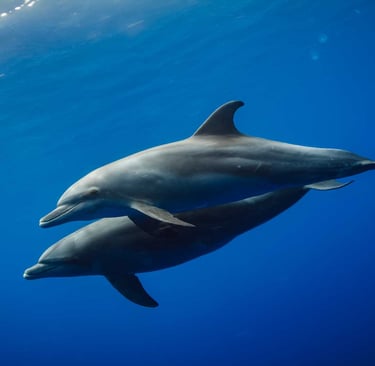
Surprising how much joy these sea dwellers bring, simply by being themselves. Their presence across global waters hints at adaptability few species achieve. Curiosity often drives them near boats, drawn by movement, sound, or silence. Intelligence shows not just in problem-solving but in group coordination during hunts. A smile-like curve marks their faces, though it serves no emotional purpose. Belonging to the cetacean order, they share ancestry with larger whales despite size differences. Communication goes beyond clicks - each dolphin has a unique whistle, like a name. Deep bonds form within pods, sometimes lasting decades. Play is common even among adults, suggesting learning never stops. Remarkable? Perhaps because they defy expectations so quietly.
What stands out most in dolphins is their mental ability. Their brains, notably developed and intricate, place them among the planet's most capable creatures. Quick learners, they adapt easily to unfamiliar tasks. Tool use has appeared in some groups - examples include fitting sea sponges over their snouts when foraging along seabed terrain. Communication carries personal marks: every individual produces a distinct sound, much like an identifier, used to locate or respond to others.
Dolphins form close bonds, seldom existing apart from others. Groupings known as pods may include only several members or extend into the hundreds. Cooperation defines their daily lives - hunting, resting, even moving through water follows shared rhythms. Care emerges naturally, with some watching over calves while others rest. Protection flows without announcement when danger nears. Unity, quietly practiced, becomes essential amid vast sea expanses.
It might surprise you - dolphins often show lively behavior. Leaping into the air, twisting mid-flight, riding swells made by ships - they do it all. Interaction with floating kelp, drifting shells, or rings of bubbles turns into activity resembling games. Objects get moved between individuals, almost like sharing tasks. Immature dolphins engage frequently in such actions, building abilities needed later in life through repetition.
Sound patterns help dolphins share information. Instead of words, they rely on whistles paired with sudden bursts of noise. These sharp pulses bounce off underwater structures. What returns gives them a sense of shape, distance, even texture. Movement adds meaning - tail flicks, posture shifts deepen understanding. Their method works well in dark or murky zones where sight fails. Precision guides every dive and turn. Navigation becomes possible without light.
For dolphins, sleep follows a different pattern compared to people. One side of their brain rests while the other remains active, so movement and vigilance continue during downtime. Awareness stays present, along with the need to reach the surface for breathing, despite partial unconsciousness.
Dolphins spark curiosity through keen minds and group coordination. Their lively behavior, combined with rare skills, adds depth to ocean stories. Discovering small truths about them reveals hidden layers of sea life. Such insights quietly highlight nature's quiet brilliance.