
The Equator's Impact on Weather and Ecosystems
Explore how the equator influences weather patterns and ecosystems across the globe. Discover the rich biodiversity of tropical zones and their crucial role in maintaining planetary stability and environmental health.
ENVIRONMENTAL ISSUES
Danny Xu
2/6/20262 min read
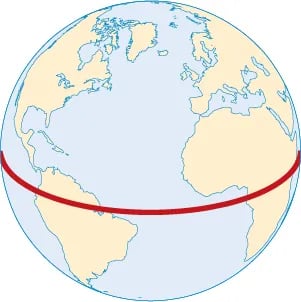
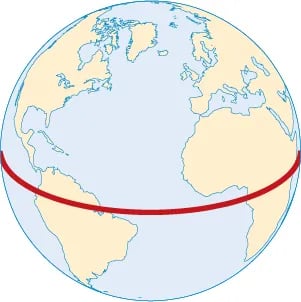
An imaginary band wraps around Earth at 0° latitude - the Equator - slicing it into northern and southern halves. Though unseen, this line strongly influences weather patterns, ecosystems, and natural diversity across continents. Tropical zones close to this midpoint brim with plant and animal life unlike anywhere else. Their environmental impact extends far beyond local boundaries. Such places form key anchors in maintaining planetary stability.
Warmth marks the zone around the Equator more than anything else. Because sunlight strikes here most directly throughout the year, temperatures stay high without major shifts across months. Farther from this belt, places face distinct cold and hot periods - such locations differ sharply from equatorial zones. Rainfall cycles shape time there, splitting the year into moist phases and stretches with little precipitation. Lush greenery thrives under steady heat paired with abundant water. Growth moves fast where damp air meets unchanging sun.
Due to such conditions, areas around the equator host immense tropical forests - some rank among Earth’s most significant natural systems. Life thrives here in remarkable forms. Within just one mile squared near this belt, thousands of distinct plants may grow alongside hundreds of unique animals. Found only in these zones, many creatures and plants do not occur elsewhere. Such rich diversity places equatorial territories at the center of worldwide preservation priorities.
Near the Equator, natural systems help shape long-term climate conditions. Because they store vast quantities of carbon, tropical woodlands reduce atmospheric CO₂ levels. Moisture moves upward during plant evaporation processes, affecting distant storms and sky cover. Disruption in these central zones creates ripples across remote regions.
Life close to the Equator often follows natural cycles. Where forests provide nourishment, so too do rivers sustain daily existence. When damage occurs to these systems, customs rooted in them begin to weaken. Loss of habitat brings loss of heritage just as surely. Preservation supports balance - not only for species, but for people shaped by those places over time.
The concept begins simply: a line drawn on maps, invisible yet powerful. Near it, nature thrives beyond comparison - thick with species, steady in weather patterns. Where change now accelerates across continents, protection of equatorial habitats becomes unavoidable. Stability elsewhere often depends on these zones remaining intact. Life stays balanced only when such areas are left undisturbed.